
Road Running Shoes
Gravel Running Shoes
Trail Running Shoes
T-shirts
Vests, Singlets
Long Sleeve Tops
Jackets, Vests
Shorts
Tights
Pants
Road Running Shoes
Gravel Running Shoes
Trail Running Shoes
T-Shirts
Tanks
Long Sleeve Tops
Jackets
Shorts
Tights
Pants
Sports Bras
Socks
Headwear
Gloves
Trail Race Mandatory Kit Essentials
Hydration Packs
Bags, Belts
Poles, Quivers
Hi-vis, Lights
Headphones
Run Technology
Eyewear
Clothing and Shoe Care
Hiking Socks & Gaiters
Hydration Packs
Bags & Belts
Poles & Quivers
Technology
GTX Care
Emergency Equipment

Run Clubbing
Run clubs are nothing new at this point. They have sprung up across the country and the core of the model is simple: Free-to-attend, “social pace”, (generally) early start, and (usually) coffee to finish.
From this base recipe the flavours emerge. Cafe-organised and supported, shoe brand tie-in, company staff-started. Some run clubs appear to be a standalone marketing success story with no particular product to speak of. The only people not setting up run clubs are the original “Running Clubs” (i.e. Athletics Clubs), and that’s kind of the whole point.
There is an age group between twenty and early thritysomethings who do not seem to be served by what’s on offer from Athletics clubs populated by youth runners and “lifetime runner” adults. Run clubs however, seem to fit the bill. The “why” will be different for everyone, naturally, but it’s not hard to see the draw for an open-minded and health-conscious generation. Young enough to want something different to what your parents did, but old enough to drive there before work. All of this could be surmised from the outside, but there was another element that wasn’t clear until I showed up myself and it was as surprising as it was refreshing; the clique-ey feeling I expected just wasn’t there.
Full disclosure: I have many social privileges that might help me “fit in” in a run club. I am a local, white, straight man who for all intents and purposes “looks athletic” in the conventional sense. I have a background in running and I have no disability. I work as a running coach. All this being known and still at nearly 33 years I was anxious to attend a run club and see if I would be accepted.
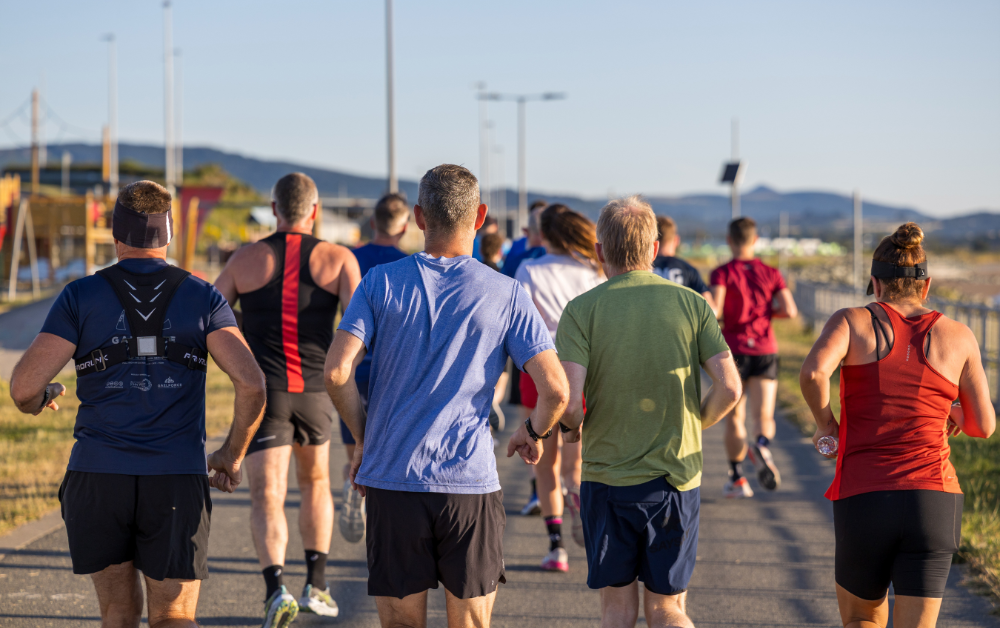
My experience was refreshingly boring; people are just there to jog and chat, it really was that simple. The ringleader Simon gave me an unassuming wave and welcome as soon as I jogged up to the group, and within a minute the man beside me (who’s name I instantly forgot) asked my name and if I had been running with the group for long. The jog itself ticked by at an impressively consistent pace of 6:00/km with nobody left behind save for those stopping to tie a lace before easily catching back up. When the loop was finished I received fist-bumps and inclusion in the group photo, as well as questions of if I would join for coffee. With the removal of the comfort-blanket of a task, social anxiety saw another opportunity to spoil an objectively pleasant experience. Again people introduced themselves and now offered seats and slightly less-audible questions. If ever the café was the new pub, it is never more so than post run-club. The difference here for me is that I never liked the pub.
Decades of programmed body and materialistic insecurity can’t be bypassed no matter how noble the intentions of the organisers. Perhaps some elements of what makes run clubs intimidating are unavoidable. Outgoing social-media savvy attendees will contribute to the success of a club whether we like it or not, and people are entitled to spend as much as they like on tops, shorts, shoes and soft little caps that make them feel good. In 2026 I would like to believe that all shapes and sorts would have as positive an experience as I did with FORUS, and I was given no indication to the contrary. Still, it would be naive to the point of ignorance to presume that everyone would have the same experience as I had. What I would dare to say is that the blank-slate of the run club phenomenon is in the ownership of a generation undeniably more socially conscious than those who built what came before.
There’s a lot that feels out of the control of “generation rent”, and it’s much easier to complain than to actually do something (anything), as run club folks have done. “Hoping” a sport becomes more inclusive is as useful as my thin gloves were at 6:29 this morning, but showing up could actually help. The ability to run 5km is a privilege that not everyone (in fact a minority) will have. Run clubs in their current guise are not accessible to all fitness levels, and they can't be. What they can do is expand their "range" as much as possible. I believe they want to do this, too.
If you are in the majority for whom that distance isn’t within reach at the moment there is cause for optimism. There has never been a time when we knew more about building safe return-to-running programs; incorporating nutrition, tailoring to the individual, fitting it around a busy life and all the while keeping it simple. Some run clubs like Early Birds Run Club in Bray specifically pride themselves on welcoming complete beginners to walk any distance and pace they choose. Expertise and support is accessible remotely or in person from coaches including ourselves at Project Health.
What run clubs are showing (for a temporarily forgotten demographic) is what we already knew; community and support work at getting people engaged. They may not be the right fit for you now and that’s ok. But, if you can just-about jog 5km and you wouldn't mind having a crew to do that with, give a run club a chance to surprise you.
Post Script:
- FORUS Endurance Rise & Run club departs 6:29am from Rise at The Cove, Greystones every Wednesday (@forus_endurance)
- FORUS X The Sports Room run club departs 6:29am from The Sports Room, Wicklow Town every Friday (@thesportsroom_wicklow)
- Early Birds Run Club meet Saturdays 8am on Bray Seafront (@earlybirds_run)
- Mile High Run Club meet Sat/Sun at 9:00am at varied locations in Wicklow Town & Rathdrum (@milehighrunclub_irl)
Conor Verbruggen is a Nutritionist and Coach at Project Health in Newtown, Co.Wicklow
More posts
Salomon Genesis 2 vs S/LAB Genesis 2 - Which Trail Shoe Should You Choose?


September 23, 2026
Salomon Genesis 2 vs S/LAB Genesis 2 - Which Trail Shoe Should You Choose?
Run Belts vs Running Shorts with Integrated Pockets: What's Best for Trail Running?


September 14, 2026
Run Belts vs Running Shorts with Integrated Pockets: What's Best for Trail Running?
Get Camino Ready: Choosing the right Footwear & Gear


September 10, 2026
Get Camino Ready: Choosing the right Footwear & Gear
Get Marathon Ready: How to Choose the Right Running Shoe for Dublin Marathon Training


July 17, 2026
Get Marathon Ready: How to Choose the Right Running Shoe for Dublin Marathon Training
Summer Training Guide: Running, Cycling & Swimming in Wicklow


July 10, 2026
Summer Training Guide: Running, Cycling & Swimming in Wicklow

- Choosing a selection results in a full page refresh.
!